
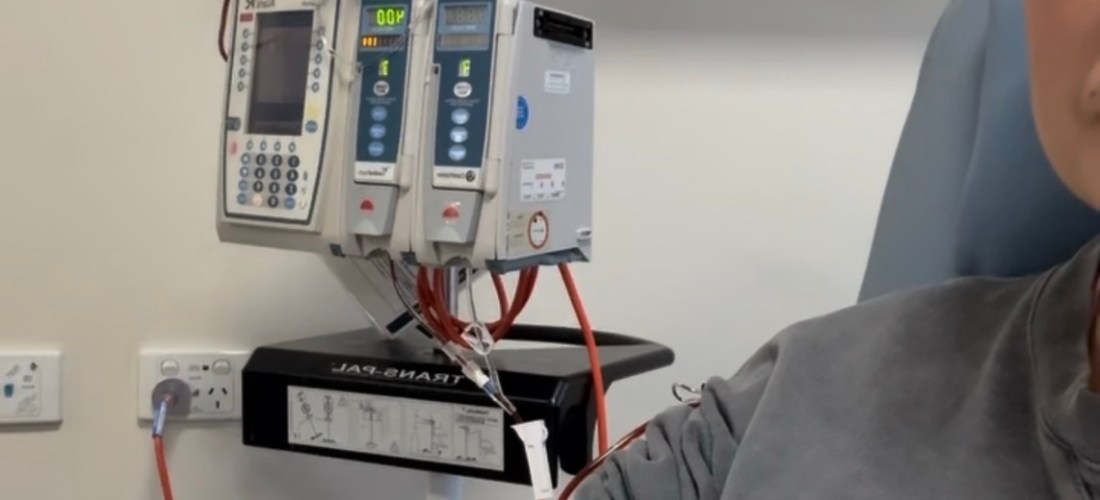
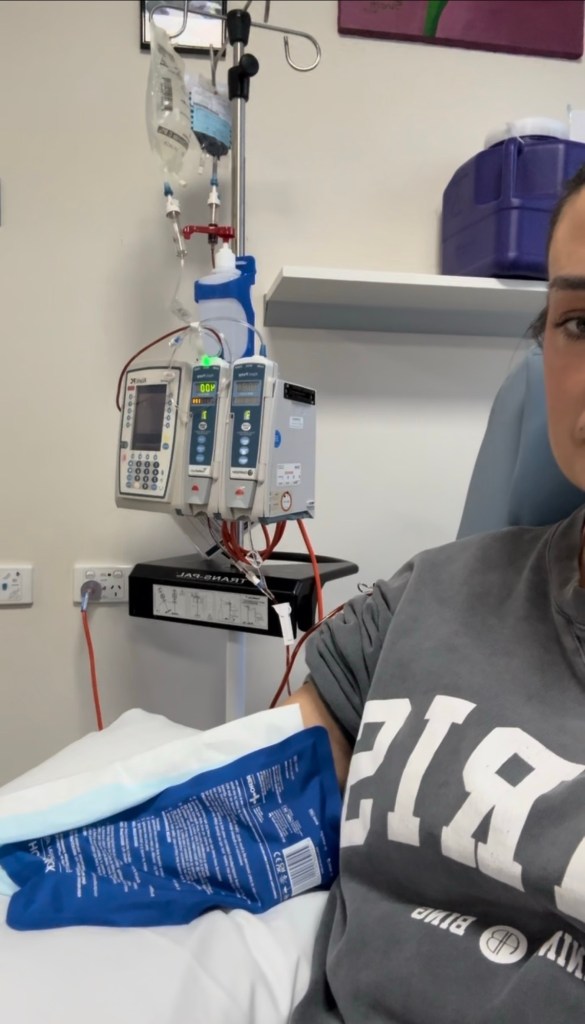
This is my personal experience with an iron infusion in Australia. I’m not a medical professional, and this post isn’t intended as medical advice. Always speak with your GP or treating healthcare professional about what is appropriate for you.
I recently had my first iron infusion after blood tests showed that my iron stores were low.
I was actually really nervous beforehand. I have a bit of health anxiety, and because I had never had an iron infusion before, I really didn’t know what to expect.
I had my infusion through a private hospital, and the actual procedure was surprisingly straightforward. I had my blood pressure, pulse and temperature checked, the IV was inserted and the iron infusion itself took around 20 minutes. This was followed by a saline flush and then I stayed for around half an hour afterwards for monitoring.
I felt completely fine during the infusion and left thinking, that was so much easier than I expected.
Unfortunately, what happened afterwards was something I wasn’t expecting at all.
I was given Ferinject
The iron I received was Ferinject, which contains ferric carboxymaltose.
Ferinject is an intravenous iron treatment used in Australia for iron deficiency in certain circumstances, including when oral iron isn’t effective or can’t be used, or when there is a clinical need to deliver iron rapidly.
At the time, I didn’t really give much thought to the type of iron I was being given. I just thought an iron infusion was an iron infusion.
I now know there are actually different intravenous iron preparations available in Australia. The TGA lists ferric carboxymaltose (Ferinject), ferric derisomaltose (Monofer), iron polymaltose and iron sucrose among the parenteral iron products used here.
That became relevant to me very quickly.
The side effect I didn’t know about: low phosphate
After my infusion, I started feeling really off.
Blood tests eventually showed that my phosphate level had dropped, a condition called hypophosphataemia.
I had no idea this could happen following an iron infusion.
The Therapeutic Goods Administration (TGA), Australia’s medicines regulator, has specifically issued safety information about ferric carboxymaltose and low blood phosphate. It states that mild, temporary hypophosphataemia is a known effect of ferric carboxymaltose and that there is also a rare risk of severe, symptomatic hypophosphataemia.
Symptoms can include things like fatigue, weakness, nausea and pain. More severe hypophosphataemia can cause more significant muscular, neurological and other symptoms.
One of the difficult things is that some of these symptoms can sound very similar to the symptoms that led you to have an iron infusion in the first place.
The TGA actually notes that symptoms such as fatigue, muscular weakness, breathlessness and headaches following ferric carboxymaltose could potentially be mistaken for the iron deficiency not improving.
What happened next for me
Once my low phosphate was identified, I was prescribed phosphate tablets.
Then came the blood tests.
I needed another blood test to check my phosphate, followed by further monitoring and more blood tests to make sure my levels were recovering.
So what I had expected to be:
Iron infusion → feel better → move on
became more like:
Iron infusion → low phosphate → phosphate tablets → blood test → monitoring → another blood test.
Thankfully, it was identified and could be treated and monitored by my medical team, but it definitely wasn’t something I’d anticipated when I walked into hospital for my infusion.
Interestingly, the TGA says phosphate levels in clinical trials tended to reach their lowest point at around two weeks after ferric carboxymaltose, although the timing and recovery will obviously vary between individuals.
What about vitamin D?
Another thing that came up during this process was vitamin D.
My vitamin D was also low, which made me wonder whether the two were connected.
This is an area where I think it’s important not to oversimplify things. Low vitamin D isn’t necessarily what causes someone’s phosphate to fall after Ferinject. Ferric carboxymaltose itself is associated with hypophosphataemia, and individual risk factors and circumstances vary.
It’s something worth discussing with your doctor rather than assuming that correcting vitamin D will prevent the problem.
I didn’t realise there were different types of iron infusions
After talking about my experience, I had people contact me and tell me that there were other forms of intravenous iron.
One of those people was a nurse working in an Australian public hospital who told me they had been using more ferric derisomaltose and suggested it was something I could ask about if I ever needed another infusion.
I found this really interesting because, until this happened, I genuinely didn’t know there was a choice of different iron formulations.
That doesn’t mean ferric derisomaltose – or any other formulation – is automatically the right option for me or for anyone else. Different IV iron products have their own indications, risks and practical considerations, and that’s a decision to make with a doctor.
But if I ever need another infusion, the specific type of IV iron being recommended is now something I will ask about.
So, would I have another iron infusion?
At this stage, my preference is to hopefully avoid needing another one.
My focus now is on working with my healthcare professionals to understand why my iron became low in the first place and what I can do to maintain healthy iron stores.
For many women, menstrual blood loss can be an important contributor to iron deficiency, so that’s one area I’m going to investigate with my doctor.
I’m also going to focus on my diet, any supplements recommended by my healthcare team, and having blood tests when appropriate so that I can hopefully address declining iron stores before they become very low.
If I do eventually need another iron infusion, I won’t automatically say no.
But I’ll definitely be asking more questions.
I’ll want to know which iron formulation I’m being given, why that particular one has been recommended for me, whether I have any risk factors for hypophosphataemia and whether my phosphate should be monitored afterwards.
Do I regret having my iron infusion?
No.
I needed to address my iron deficiency, and experiencing a complication doesn’t mean iron infusions are bad or that somebody else shouldn’t have one.
Ferinject is a registered medicine in Australia and is used to treat iron deficiency.
My experience is simply that – my experience.
What I wish I’d known beforehand was that an “iron infusion” isn’t necessarily just one medication, that there are different IV iron preparations available, and that low phosphate is a recognised potential complication of ferric carboxymaltose.
If sharing my experience encourages someone else to have a more informed conversation with their doctor, then I think it’s worth talking about.
And if you’ve recently had an iron infusion and you’re feeling unusually tired, weak or generally unwell afterwards, don’t assume it’s simply your iron taking time to work. Speak to your doctor about your symptoms and whether further blood tests are appropriate.
This article describes my personal experience and is provided for general information only. It is not medical advice and should not be used to diagnose or treat iron deficiency or hypophosphataemia. Always seek advice from your GP or another qualified healthcare professional.

